Sue Kohl Tamaoki is based in the San Francisco Bay Area. Until recently, she owned and operated a senior referral agency, helping families find assisted living and memory care for loved ones. Prior to becoming a senior referral agent, she was a technical writer and editor, instructional designer, and college instructor. Sue writes this blog to share what she has learned from working with families who want to help an aging loved one, but aren’t sure where to go or what to do.
Disclaimer
Sue has a Certified Senior Advisor credential, but is not a medical practitioner, financial planner, or lawyer. She is not affiliated with any organization or religious group. The information in this blog is for educational purposes only and should not be used as a substitute for advice from a licensed professional. Any action you take based on the information provided here is strictly at your own risk.
I’m enjoying the police drama called Astrid, which is on Amazon Prime and sometimes on PBS. The show is about the professional partnership and friendship between Astrid, an archivist with Aspergers Syndrome, and Raphaelle, a homicide detective in the Paris police force. In this post, I want to share a technique Astrid uses to help her self-regulate her emotions.
Astrid is more than capable at her job as an archivist in the judicial library in Paris. However, any unexpected change in her daily routine or encounter with a stranger can make her a nervous wreck. She’s afraid of doing or saying the wrong thing. So it’s no surprise that when Astrid becomes part of a homicide investigation and has to interact with police officers and witnesses, sometimes she gets so overwhelmed that she melts down and collapses.
A neuro-typical (NT) person instinctively knows when and how to slow down so they can keep going from morning to night. A quick break, a cup of coffee, or simply moving on to a different task may be all that is needed to become re-energized. At the end of the day, an NT person might be tired, but not to the point of collapsing from exhaustion.
But people on the autistic spectrum, like Astrid, often don’t know how or when to stop when they get stressed. They just keep pushing themselves until they have no reserves left and completely shut down. It’s common especially for children on the spectrum to use up all their energy to hold themselves together so they look “normal” during the school day, but as soon as they get home where they feel safe, they will explode–throw a temper tantrum, run in circles to burn off energy, or just dive under the bedcovers. The facilitator in Astrid’s social studies group shows her a technique that he uses to get through the day without breaking down. It starts with putting 10 beans in a pocket. The beans represent his reserve of energy for the day. Whenever Astrid gets stressed, she moves one or more beans to a different pocket. An unexpected social interaction, like having to talk to a witness at the crime scene? She loses one bean. A noisy room or loud music? Two beans. A quiet hour at her desk? She gets one bean back. The goal is to keep as many of the 10 beans as she can by the end of the day. If there are just a few or no beans left in the first pocket, then she knows that she is minutes away from a melt-down unless she immediately drops whatever she is doing and finds a quiet place where she can be alone and regroup.
Anyone else watching the police drama called Astrid? It’s on Amazon Prime and sometimes on PBS. It’s in French with English subtitles. The title in France translates as Astrid and Raphaelle, which is a much better title, in my opinion, because this show isn’t just about a young woman named Astrid. It’s about the unlikely friendship between two women—Astrid, an archivist with Aspergers Syndrome who strictly follows rules and Raphaelle, a homicide detective in the Paris police force who likes to bend them.
Astrid works alone in basement of the library
Astrid loves solving puzzles and has an eye for detail. She excels at her job as an archivist in the judicial library in Paris, but outside of work, she’s a nervous wreck. Making a phone call or having to talk to a store clerk can make her physically ill. Outside of work she often wears noise-cancelling headphones so she can block out distractions, which includes both noise and other people.
Astrid often takes what others say literally. If someone asks her if she has a minute to talk, she will look at her watch and after 60 seconds, she will walk away. If a colleague says don’t move because he wants to give her something in the next room, she will stand as still as a statue until he returns.
Raphaelle
Raphaelle is a commandant in homicide. Raphaelle first takes notice of Astrid when she asks the archive to pull the files on two recent suicides. Astrid hands her three files and points out details that suggest that the suicides were actually murders, probably done by same person. Raphaelle is impressed by Astrid’s intelligence and asks her to help with other investigations going forward.
Astrid is lonely and would love to have friends, but she often says and does the wrong thing without realizing what others might think. When Raphaelle sees Astrid stumble, she often gently pulls Astrid aside to give her a few words of advice. Over time, we see Astrid and Raphaelle not only share their thoughts on each case, but also share stories about their lives.
I like how the program shows the world through Astrid’s eyes and how others in the police force slowly warm to her and come to value her not only as a colleague, but as a friend.
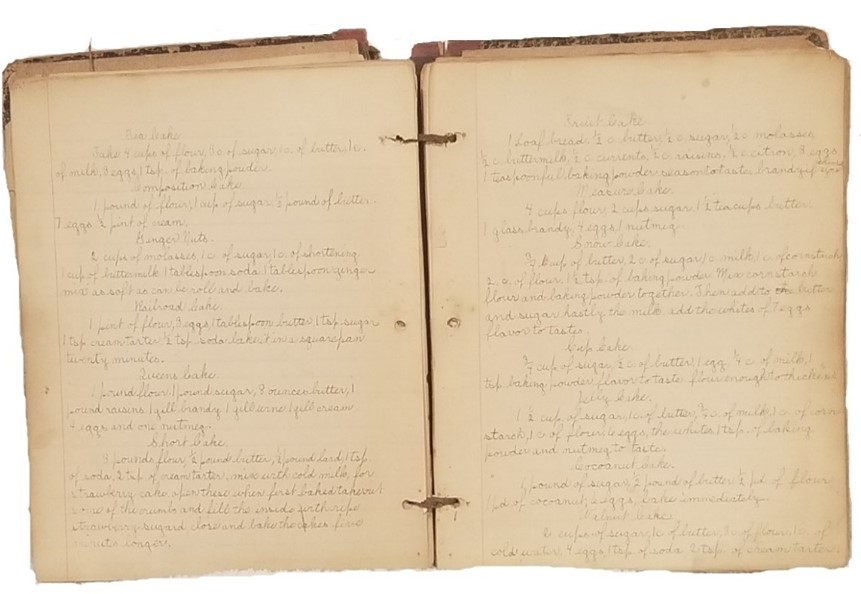
My grandmother’s 1900 composition book with recipes
One says add 25 cents worth of meat. Another says add butter, one-half the size of an egg. I’m talking about recipes I found in my Grandma’s notebooks from 100 plus years ago. I wonder how much meat 25 cents would buy back when she wrote the recipe. Certainly more than just the spoonful it would buy today. And how big is one-half of an egg anyway? Or for that matter, how big was a whole egg back then? Aren’t eggs bigger now than they were 100 years ago?
I have three of her recipe books. Her handwriting is absolutely beautiful. Each letter is written perfectly the same every time, and the spaces between words are precise and even. At first glance the pages look like they were created using a cursive font on a computer.
The largest recipe book is a composition notebook from her school days. It mostly has recipes, plus general rules for cooking and good table manners. My grandmother was born in 1888 in Davenport, Iowa and her formal education ended with her 8th grade graduation, so I suppose the composition notebook is from 1900 or thereabouts.
The second recipe book is pocket-sized and filled with newspaper and magazine clippings. But are these recipes she actually made? Or are they recipes that just caught her eye, but never got around to making? My mom also collected recipes, but never made most of them. In later years, she typed them on her computer. I remember when I told her about having a lemon tree in the back yard and a bumper crop of zucchini. Mom sent me sent me printouts of dozens of recipes for lemons and for zucchini, most of which she never made, but had painstakingly typed and stored in her database.
The third notebook is small and has my grandmother’s handwritten recipes, mostly desserts. I guess I must have gotten my sweet tooth from her. Most recipes just list the ingredients. There are no instructions. Nothing about mixing the dry ingredients together, then mixing the wet ingredients together, and then combining the dry and the wet ingredients, and then baking the batter at a specific temperature for an estimated number of minutes.
At first I thought the recipes were missing instructions because she was writing down the recipes just for herself and so there was no point in writing more since she knew what to do next. But I was wrong. When I looked at the recipes in her school composition book, they, too, were missing instructions when it came to baking.
I did a little research and found that around 1900 stoves used wood, coal, or gas. Ovens didn’t have thermostats until after WWI, so recipes at the turn of the century didn’t mention what temperature to use or how long to bake something. No one knew exactly what temperature their oven was, but they had an understanding of how much fuel was needed to get the oven just right for baking (not too hot, not too cold) and how much time was needed for each recipe.
I heard that my grandmother was a good cook, but there’s no one left who can tell me what her best dishes were or what her recipes should taste like. I’d like to try my hand at making some of her recipes, starting with that little brown notebook, the one with the recipes she carefully copied by hand.
According to AARP, about 90% of older adults want to stay in their homes as long as they can and almost 50% of adults over 60 have been in their homes for 20 years or longer.
The good news is that with the right home modifications plus the right level of help, most older adults can safely age in place at home.
The earlier you plan where you age in place, the better. Planning ahead gives you time to make decisions calmly and look for ways to cut costs. You don’t want to wait until there’s a crisis where you are forced to quickly remodel your home or else find a new place to live.
A home safety check should be part of your plan to age in place. Your home should be safe and easy to navigate, even with a cane, walker, or wheelchair. Falls can be prevented by removing throw rugs, picking up stuff left on the floor, moving furniture so it doesn’t block someone’s path, replacing loose carpeting, adding grab bars, improving lighting, and so on.
Getting rid of the clutter should also be part of your plan, but it’s also the hardest. Here are some approaches that may help you get started.
Marie Kondo’s KonMari Method™ is for anyone who is sick and tired of coming home to a house that is cluttered, dusty, or unorganized.
The KonMari Method asks you to take a fresh look at your possessions. You can keep what sparks joy, but you must get rid of everything else.
Marie Kondo’s approach is to sort your possessions by category, not room by room. The first category is clothing, then books, papers, komono (anything that doesn’t fit in the other categories), and, finally, sentimental items.
After tossing, giving away, or selling the things that are no longer wanted or needed, the final step is to reorganize what is left so that there is a place for everything and everything in its place.
The end result is a well-organized, peaceful home that is not only a joy to come home to and is easier to keep clean.
Consider Death Cleaning
Check out the English translation of The Gentle Art of Swedish Death Cleaning by Margareta Magnusson, written as she says, when she was between 80 and 100. Don’t be put off by the title. This book is actually a fun and easy read.
Death Cleaning is a direct translation of a Swedish word, döstädning. Although Death Cleaning can involve some actual housecleaning, it’s more about putting one’s affairs in order either before or after a death.
In Magnusson’s case, she started her personal Death Cleaning after she became a widow. She was in good health, but maintaining her home and doing yard work were becoming more of a burden. She wanted to spend the rest of her days living as comfortably and as stress-free as possible.
Magnusson had painful memories of the Death Cleaning she did when closing up her mother’s house after her mother passed, and she did not want her children to be burdened with the same task. She wanted to leave only happy memories behind.
So she decided to sell her home in the country and move to an apartment in the city. She picked a location that was within walking distance of shops, pharmacies, theaters, and restaurants so she would not need to depend on others for transportation when she wanted to go out.
Magnusson told her family and friends about her intention to give away, donate, or toss what wouldn’t fit in her new apartment and lifestyle. If someone didn’t want an item she offered, it was OK to say no so she could offer it to someone else.
She started her Death Cleaning by clearing out the attic, basement, and other storage areas. Then she sorted her clothes. Next, she worked room by room, carefully choosing the items she wanted to keep for her new apartment. She saved sentimental items for last. As she worked, she made a point of disposing of potentially embarrassing items. To quote Magnusson:
“Save your favorite dildo, but throw away the other 15!”
Her book is not really an instruction manual for downsizing. It’s more about how downsizing feels from start to finish. In the end, it felt good to let go of the clutter, and it especially felt good to know that her treasures were in the hands of those who would care for them as she did.
Feng Shui and living your best life
According to the principles of Feng Shui, luck is constantly changing, from good to bad, and then back to good again. Adjusting how energy flows through a room, house, building, or even a garden can influence one’s overall health, safety, prosperity, career, love life, and happiness.
A Feng Shui master may consult a compass or spend hours analyzing a client’s Chinese astrological sign to determine the optimal furnishings for a home. But you don’t have to be a Feng Shui master to create a home that is warm, welcoming, and healthy. Basically, for good Feng Shui, a home should be clean, organized, well-lit, and free of clutter.
According to Grand Master of Feng Shui Lillian Too, you can start improving your home’s Feng Shui right away by getting rid of broken or damaged items, dying plants, things you never use, expired medications and make-up, outdated foods, and especially anything that triggers bad memories. Having too many things in a room can impede the flow of energy, allowing stagnant, negative energy to accumulate (along with dust, mold, and pests). Once the house is cleared of clutter, then you can start rearranging furniture, painting the walls, and adding more mirrors and plants. According to Master Too, getting rid of the clutter will not only refresh your home’s energy, it will also refresh your own.
In 2019 a new law in California called AB-5 (Assembly Bill 5) cracked down on app-based employers who classified their gig workers as independent contractors instead of putting them on the payroll as employees. Under AB-5 companies could still allow gig workers to pick and choose their hours, but they would have to pay them by the hour instead of by task. They would have to pay at least 120% above the minimum wage and for the first-time, compensate their workers for out-of-pocket expenses, such as uniforms, masks, disinfectant, and so on. They would also have to offer health insurance, sick leave, vacation pay, overtime pay, worker’s comp for injuries on the job, and unemployment.
Some businesses have quietly complied with the new law, but others have refused and are challenging AB-5 in the California courts. Uber and Lyft have threatened to leave California if they are forced to comply with AB-5, although a price increase of around 10% would probably cover the expenses of reclassifying gig workers as employees.
Just in case things don’t go their way in the courts, Uber and Lyft have enlisted the help of other app-based companies to get Prop 22 on the November ballot in California.
Together Uber, Lyft, DoorDash, Postmates, Instacart, and Shipt have collected $181 million to tell a story to convince voters to vote for Prop 22. The ads say things like Prop 22 preserves flexible work schedules (gig workers already have this under AB-5), gig workers want health care benefits (but most gig workers won’t qualify for the health care subsidy under Prop 22), and gig workers want the new earnings guarantee (but with Prop 22 will take home less than minimum wage after expenses). This has become the most expensive ballot measure in California. Bigger than Big Oil, Big Tobacco, or Big Pharma.
The opposition, the No on Prop 22 campaign, has raised barely $1 million, but it has the support of Joe Biden, Kamala Harris, Elizabeth Warren, and several unions.
Under Prop 22 gig workers will not be employees, but they won’t be independent contractors, either. They will be something completely new: a third category of worker that exists nowhere else: part independent contractor and part employee.
The general public probably doesn’t know anything about the benefits offered to gig workers in AB-5 and so doesn’t realize that Prop 22 actually takes away more than it gives. Prop 22 promises a base pay per task plus a health care subsidy. Prop 22 takes away compensation for out-of-pocket expenses (uniforms, PPE, disinfectant, car maintenance and repairs, cell phone data). It takes away sick leave, vacation pay, overtime pay, unemployment, and worker’s comp for injuries on the job.
The base pay offered in Prop 22 would still in result in gig workers taking home less than minimum wage after their out-of-pocket expenses are subtracted. The base pay would continue to be based on the time that the company thinks a task should take, rather than the time a task usually takes. Gig workers would still not be paid for the time spent waiting to complete tasks or the time spent waiting between assignment, time stuck in heavy traffic or in a long checkout line, time driving home from a remote location, or time spent cleaning and disinfecting their vehicles between rides.
Most gig workers would not qualify for the meager health care subsidy offered in Prop 22 as it would only be offered to gig workers who have tasks that add up to more than 15 hours a week.
Right now the breakdown on Prop 22 with gig workers seems to be between part-time and full-time gig workers, with most part-timers saying yes to Prop. 22 and most of the full-timers saying no.
There are more part-time gig workers out there than full-timer gig workers, but over 50% of the work is done by the full-timers. The part-timers tend to work for just a few months before going on to something else after a few months. The full-timers tend to take their jobs very seriously, but have noticed that they are working longer hours to take home what they used to earn in the past.
While workers risk the lives of their family and themselves every time they get in their car during this pandemic, companies like Uber, Lyft, Postmates, Instacart, and Shipt, have made record profits. It’s time for app-based businesses to own up to their responsibilities and to the people who make them successful: their workers. These established and profitable companies can afford to pay their workers a living wage and give them some basic protections. It’s time for them to stop pushing the costs of doing business to their workers.
Don’t believe the story that the gig companies are telling you. Let’s make gig companies follow the law. Vote No on Prop 22.
I’m obsessed with Instacart and its orange carrot logo. I was an Instacart shopper prior to the pandemic and I can’t seem to get over how much customers love having groceries delivered to their door and yet how badly Instacart consistently treats its growing army of shoppers.
Several news items about Instacart recently grabbed my attention.
The COVID-19 pandemic has made the CEO of Instacart, Apoorva Mehta, a billionaire.
Instacart has joined forces with other gig companies to place an initiative on the November ballot in California that will change (lock in and lower) how much gig workers are paid.
Instacart’s customer data, including names, addresses, credit card information, and order histories are being sold on the dark web. Instacart is pointing the finger at customers who use the same login credentials on multiple websites and apps, making them vulnerable to hackers. But others suspect that Instacart itself had a data breach, pointing to a six-character password policy that is below the industry standard.
How low can Instacart go?
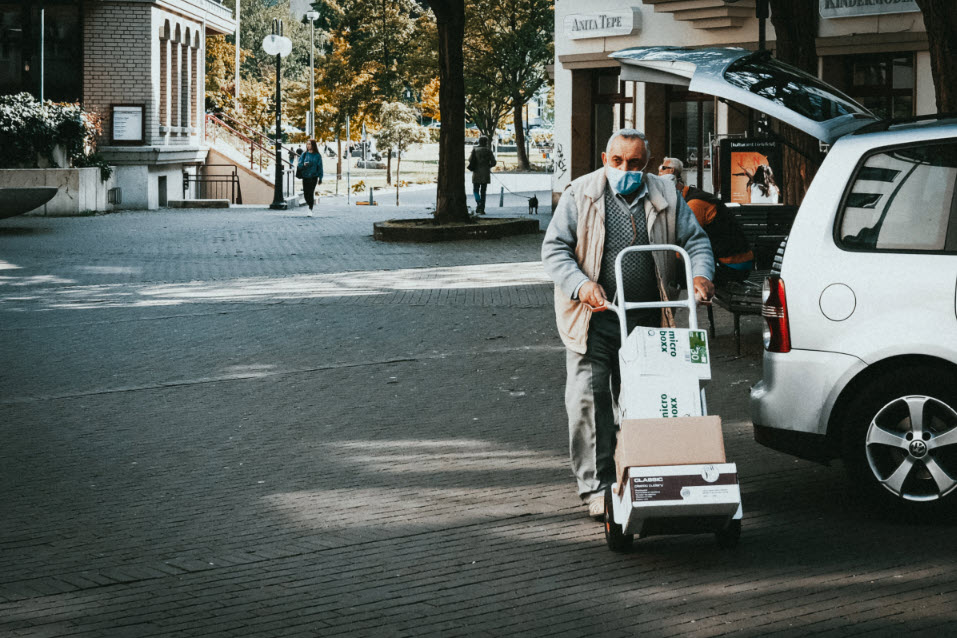
Photo by Heather Gill on Unsplash
When Apoorva Mehta started Instacart in 2012, the very first shoppers were employees paid by the hour. Over time Instacart switched to using independent contractors who were paid using a straightforward calculation based on a flat fee per delivery, an amount per item, plus an amount per mile from the store to the customer’s house. The larger the shopping list, the more money the shopper was paid. Customer tips sweetened the deal. Teachers quit their jobs to become full-time shoppers because working as a full-service shopper paid 50% more than working in the classroom. The Instacart website used to claim that shoppers could make $25 an hour. Today most shoppers make less than minimum wage and that’s including the tip.
The trouble started for Instacart shoppers in 2016 when Instacart replaced a transparent pay model with an algorithm-based model. Shoppers suddenly noticed that the pay per batch had suddenly dropped about 30% and, worse yet, they were no longer getting their tips. Instacart apologized, blaming bugs in the new algorithm. Instacart restored the missing customer tips, but they continued to and still continue to tweak the algorithm used to calculate pay and, in the process, gradually reduce the pay per batch.
Experienced shoppers have noticed that Instacart has a history of tweaking the algorithm and cutting shopper pay during holidays or whenever there’s a high demand for groceries plus people who are willing to take on a low-paying job for some extra pocket money, such as during this pandemic with 30 million people getting unemployment benefits.
Shoppers have no idea how the algorithm works. It supposedly tallies the number of items on the shopping list, the number of heavy or oversized items, peak shopping hours, driving time, and customer ratings. Many shoppers refuse to take the lowest-paying batches so if the algorithm did its jiggery pokery and came up with a number that was too low, such as a request to pick up two items at the grocery store, Instacart would round up the offer to a minimum of $7 or $10, depending on the location.
Instacart shoppers have gone on several strikes to ask for better pay and working conditions. The strikes have had mixed results. The most recent strike in March asked for help to reduce the risk of exposure to COVID-19. Instacart responded by announcing that they would give shoppers personal protection equipment. This consisted of a one-time offer of a pair of gloves, a mask, a small bottle of hand sanitizer, and a paper thermometer. The kit did not include any wipes or disinfectants for cleaning shopping carts or their cars. Instacart also promised two-weeks of sick pay for shoppers who contracted COVID-19, but the company has made it nearly impossible for shoppers to get compensated.
Tips, scams, and bots
Customers have been generous with tips during this pandemic, although a few have tried to game the system. Some customers offer a generous tip up front and then remove the tip after delivery. Smart shoppers have started taking photos of the grocery bags at the customer’s door as proof of delivery because some customers have claimed their groceries never arrived although the shopper placed the bags in the customer’s hands at their door.
Shoppers need to watch out for phone scams where someone claims they are from Instacart and then asks the shopper to confirm some personal information. The scammer then uses that information to break into the shopper’s account at Instacart and transfer the shopper’s hard-earned cash to the scammer’s bank account.
Instacart has been slow to respond to complaints about bots or third-party apps that hack into Instacart’s database and route the highest paying batches to unscrupulous shoppers for a fee, essentially stealing batches meant for other shoppers.
Despite all these obstacles, enthusiastic new shoppers sign up with Instacart every day. You can find them on social media, especially in the private Facebook groups for Instacart shoppers. Since March, Instacart has added 300,000 shoppers and plans to hire 250,000 more by the end of the year. In some parts of the country there are so many Instacart shoppers that shoppers are waiting for hours for the next batch to come in. I wonder how many of these new shoppers understand what it means to be an independent contractor, that they have to set aside part of what they make for taxes and for the extra car insurance required, that there is no paid time off, or no worker’s comp if they get injured carrying someone’s groceries.
Shipt workers cite lower pay, missing tips with their new algorithm
Shipt is a grocery delivery service that is similar to Instacart. Shipt is owned by Target. Shipt’s business has boomed during the pandemic. And like Instacart, Shipt’s good fortune has not trickled down to its shoppers who risk their lives to provide this service.
Shipt is gradually replacing their flat-fee pay model with an algorithm-based model just as Instacart does. Shipt says that the algorithm allows shoppers to be compensated more fairly as it takes into account the actual effort it takes to complete and deliver an order, rather than just the size of the order. However, under the new algorithm, some shoppers have reported a 30% to 50% drop in earnings. Some areas of the country have reported missing tips.
Understandably, shoppers are not happy and have gone on strike in April, May, and again on July 15. They worry that Shipt is going the route of Instacart where the company will use the algorithm to discretely lower pay whenever it wants to. Shoppers are asking Shipt to not lower their pay and to also provide masks, gloves, and other personal protection equipment for shoppers.
Summary
Business has been good for Instacart, Shipt, and other home delivery services. Thanks to COVID-19, the CEO of Instacart has become a billionaire. But the workers who risk their lives to deliver food to the healthy and to the sick have another story to tell, of low pay, an unpredictable work load, missing tips, phone scams, bots that steal orders, and inadequate protections against COVID-19.
These shoppers are the face of the company as far as the customer is concerned and treating shoppers badly in the long run is going to negatively impact the quality of the service they provide.
The combination of low pay plus high risk has caused many shoppers to walk away from the gig economy. But for every shopper that has left, many more are jumping at the chance to have some money coming in again. The reality is that if these home delivery companies don’t start treating their shoppers better and start paying their workers a living wage, as soon as the economy gets back to normal, these shoppers along with some customers will go somewhere else.
Social distancing because of COVID-19 has been especially tough in the assisted living and retirement communities. Residents have been staying in their rooms, all day, every day. Meals have been delivered to their door. If the dining room is open, residents can’t sit together so they sit eating alone at a table. Weeks have gone by without having the freedom to come and go. No group activities or outings. And worst of all, no visitors from the outside, unless they come to a window and wave.
In April, a marketing firm called Luckie reached out to a chain of assisted living communities with an idea for helping their residents stay connected and positive while they were confined to their rooms. The result was a radio station that would be run by and for assisted living residents called Radio Recliner.
The original plan in April was to have Radio Recliner be a temporary means of connecting residents for the next 30 days, the expected length of the quarantine. But as the quarantine has continued well past 30 days and with no end in sight, so has Radio Recliner.
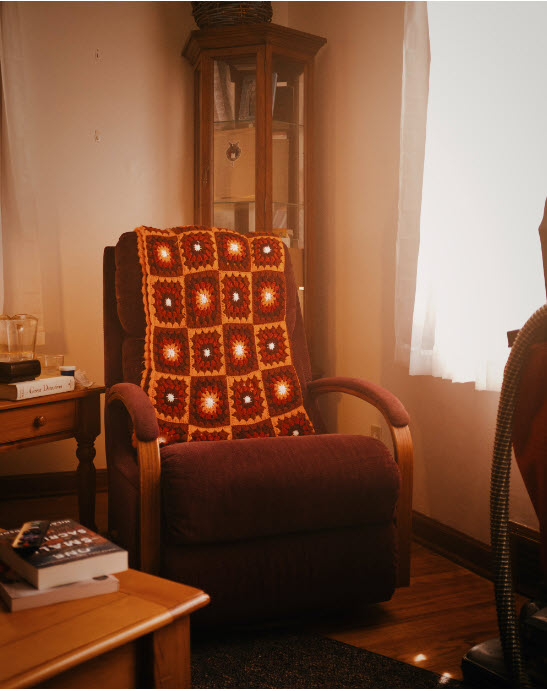
The DJs have fun names like the Karaoke Cowboy, M&M, Miss Fancy Pants, Jersey Jack, Silver Fox, Birdman, Sunshine, Charming Charlie, Chickity Chick, Ginger Bee, and Sassy Sara. The DJs record their shows by phone from the comfort of their rooms, some actually recording their shows from a recliner. A producer adds the music later. The DJs create their own playlists, picking their favorite bands and songs from a lifetime of music. One DJ only plays Elvis. Another just plays Country. Some like to mix it up, playing a little bit of everything from the Big Band sounds of the 40s, 50s doo-wop, the British Invasion in the 60s, Rock, and Pop. They share memories and life experiences, along with requests from listeners to dedicate a song or to pass along a message to someone special. They also share how they are coping with isolation and loss while being confined in their room.
Most of the deaths from COVID-19 in the United States have been in nursing homes. COVID-19 isn’t just killing patients in nursing homes, it’s also killing the people that work there, too.
I recently saw an ad from a mattress store that said it was time to buy a new mattress and bring Grandma home where it’s safe. In my opinion, if Grandma is living in a retirement village or a nice apartment in assisted living, she’s probably safer staying where she is. But if Grandma is currently in a nursing home, I’d bring her home if I could.
Nursing homes are designed to provide physical therapy and extra bed rest after a hospital stay. They are just not set up to handle anything as contagious as COVID-19, and the current lack of access to diagnostic tests and personal protective equipment (masks, gloves, gowns) at nursing homes has certainly made the spread of COVID-19 worse.
Full disclosure here. I used to own a senior referral agency where I helped families find senior housing in assisted living facilities. So whenever I hear something about a nursing home in the news, one of the first things I do is question if the story is really about a nursing home or just senior housing in general.
Most people tend to call any and all types of senior housing a nursing home. Senior professionals, like me, like to make a distinction between nursing homes and assisted living for good reason. Although both provide long-term care, the odds of surviving a pandemic are much higher in a private apartment in assisted living than in a shared room in a nursing home. Let me explain.
SNFs provide medical care, but are understaffed
Nursing homes are more properly called skilled nursing facilities (SNFs or “sniffs”). A SNF provides round-the-clock medical care for patients of all ages who are not sick enough to be in a hospital, but are too sick to go home. Nursing home patients can be any age, although many are over 80 and quite frail.
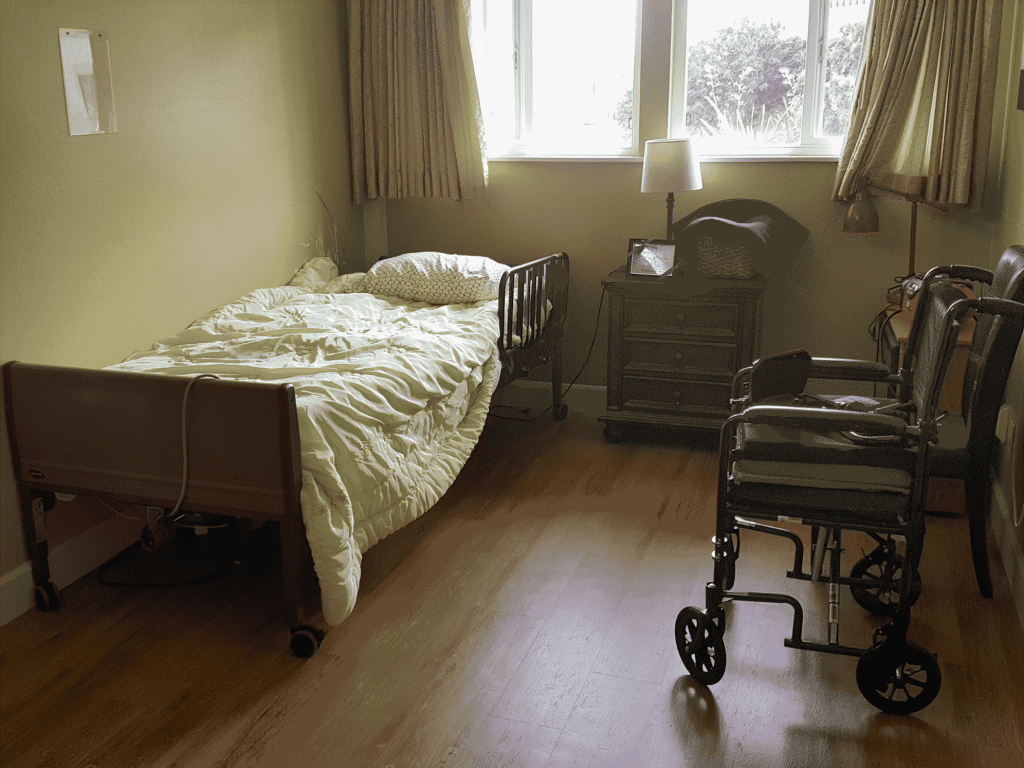
A private room in a nursing home
A SNF has doctors, nurses, aids, therapists, dieticians, activity directors, and case managers. The aids who help patients eat, bathe, and dress have little or no training and are paid a little more than the minimum wage. Many aids have to work more than one job to pay the bills.
The rooms look like hospital rooms, with one or two hospital beds, plus a small closet or a few shelves for personal items. Meals are based on each patient’s dietary needs, just like in a hospital. Patients are usually in their pajamas and are confined to bed for most of the day.
Most patients at a SNF are there for a short time following surgery, illness, or injury. Some low-income seniors may find themselves becoming permanent residents because they require the kind of ongoing medical care that is covered by Medicare and Medicaid as long as they stay in the SNF. In other words, Medicare and Medicaid won’t pick up the tab for care at home or a move to assisted living.
It’s common to see nurses and aids at a SNF rushing from room to room to make their rounds while responding to emergency call buttons. Tests for COVID-19 and personal protection equipment (masks, gloves, gowns) are still in short supply. Under these circumstances, it’s easy to understand why the death toll from COVID-19 has been so high at nursing homes.
ALFs help with general assistance for a price
ALFs or assisted living facilities are a different story. Some are modest, while others look like five-star resorts (and charge similar fees).
Residents are free to come and go as they please in assisted living. Staff keeps a watchful eye, encouraging residents to make friends and not spend too much time alone in their apartment.
The basic monthly fee includes an apartment, meals, local transportation, lots of clubs and activities, and housekeeping. Help from a caregiver costs extra. The more help that someone needs in the shower, getting dressed, eating, managing medications, and so on, the higher the monthly fee. If a resident becomes injured or ill, the ALF can contact the family and call an ambulance, but cannot provide medical assistance.
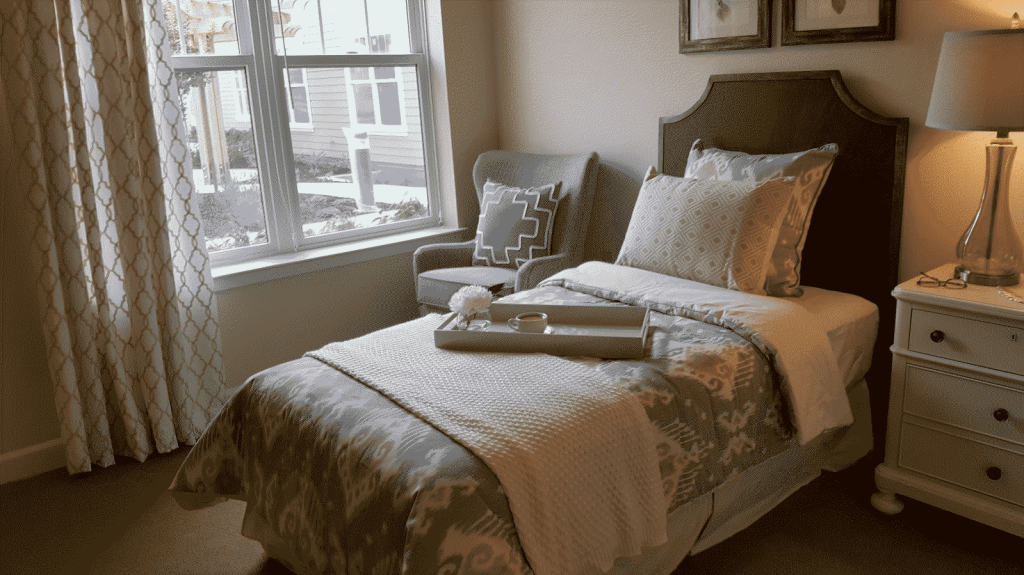
Residents bring their own furnishings to their apartment in assisted living
During flu season, it isn’t unusual for an assisted living facility to go into quarantine. The building will be continuously scrubbed and disinfected from top to bottom. Visitors will be turned away and outings cancelled. Residents will be asked to stay in their rooms as much as possible for their protection, with meals being delivered to their rooms by kitchen staff.
This long quarantine has been especially hard on residents and their families, but Grandma has a better chance of surviving this pandemic safe in her private apartment in assisted living than if she was sharing a room in a nursing home, especially if that nursing home does not have access to tests for COVID-19 or enough masks, gloves, and gowns to protect patients and staff.
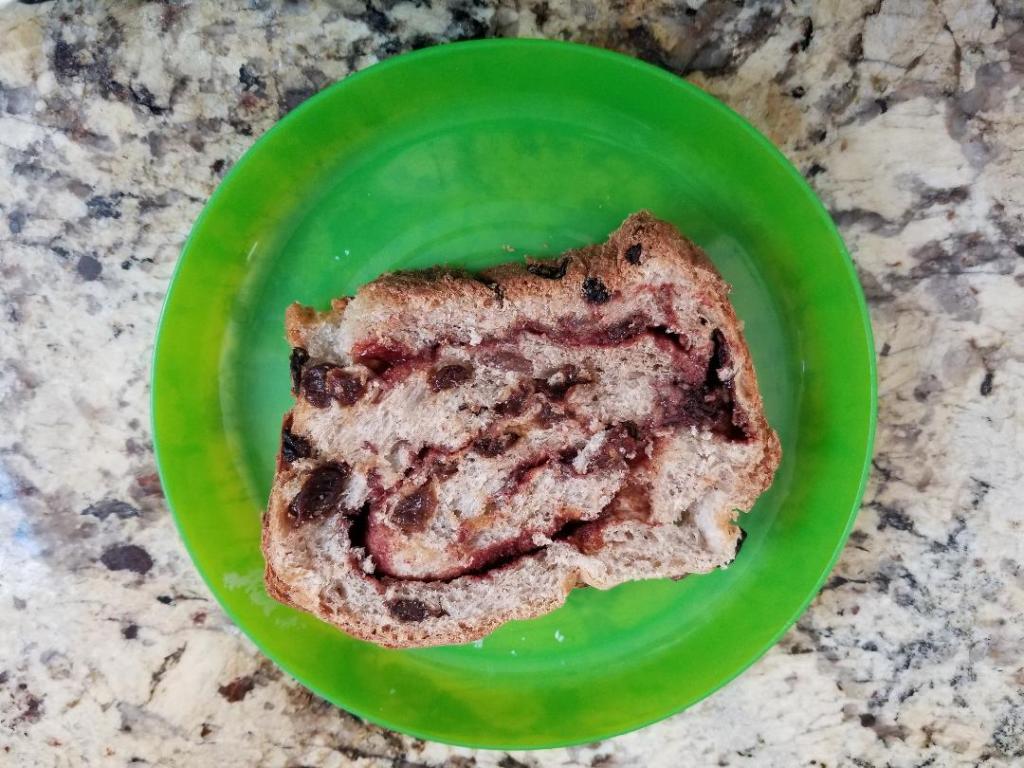
Since the stay-in-place order due to COVID-19, it’s become a lot harder to find my favorite raisin bread so I decided to make my own just the way I like it with lots of raisins and plenty of cinnamon. This recipe is a combination of three recipes, plus some tweaks of my own.
Add in the order recommended for your bread machine and select the Manual cycle.
Add 1 to 1 ½ cups raisins when the machine beeps for added ingredients (usually about 30 to 40 minutes in the cycle). 1 cup warm water 2 tablespoons butter 3 cups flour 3 tablespoons sugar 1 ½ teaspoon salt 1 teaspoon cinnamon 2 ½ teaspoons bread machine yeast
Make the cinnamon sugar. 1/3 cup sugar 1 tablespoon cinnamon
Roll out the dough on a floured surface to make a rectangle about ½ inch thick with same length as your loaf pan.
Moisten the dough with 1 tablespoon of milk and sprinkle the top evenly with cinnamon sugar.
Roll up the dough tightly the long way. Tuck under the ends and pinch the bottom seam together.
Place into a well-greased bread pan so that the bread roll seam is at the bottom. Lightly grease the top of the loaf.
Let the dough rise uncovered in a warm place for about an hour.
Bake at 350° for 45 minutes or until the loaf is lightly browned and sounds hollow when tapped.
Put the bread pan on a rack and spread the top with melted butter.
Remove the loaf from the pan after 20 minutes. Allow to cool before slicing.
In mid-March 2020 just before COVID-19 was officially declared a pandemic, I went to Sam’s Club to pick up groceries for the week and was shocked to find mostly empty shelves. There was plenty of Easter candy, but not much else. No bottled water, toilet paper, paper towels, laundry detergent, chicken, meat, fish, eggs, milk, juice, cheese, pasta, pasta sauce, cereal, or frozen foods (except for a few bags of frozen blueberries). There were apples, but no bananas or grapes or strawberries and suddenly I wanted bananas and strawberries more than anything. I circled the aisles and chatted with the other shoppers looking at what was left on the shelves.
When I got to the checkout line, my normally full cart was still mostly empty. I chatted with the man behind me as he unloaded his cart. He told me that he really liked brownies and, believe it or not, he could eat an entire box of brownies in a week. He was stocking up because there might not be any brownie mix in the stores for a few months. I counted 16 large boxes of brownie mix and noted that each large box was the equivalent of four normal boxes or four 8 x 8 pans of brownies. That’s a lot of brownies. He must have taken every last box in the store, not leaving any for anyone else. What did he think was going to happen anyway? What was everyone thinking?
For days I thought about that man and his brownies. Could he really eat four pans of brownies in a week? Could anyone for that matter? Or did he mean that he just ate one pan of brownies in a week?
I did the math. If he ate the entire box (four pans), how many brownies would he eat in a day? Did he cut each pan into tiny brownie bites or in big jumbo squares? Did he gorge himself by eating a lot of brownies in one sitting or did he spread them out throughout the day, having a few at breakfast, lunch, and dinner, plus snacks. And would he really eat so many brownies, day after day, week after week? Even if he ate just one 8 x 8 pan a week, it was awful to think about.
Maybe he made and sold pot brownies. Maybe he was planning to sell brownies at an inflated price from the back of his car or on eBay, like some people were selling toilet paper and hand sanitizer. Or maybe he thought he could trade brownies for toilet paper during the coming zombie apocalypse. What I think is more likely is that he was caught up in the panic buying at the store and when he saw the brownies that he loved, he impulsively bought every last box.
I’m writing this in April. The stay-at-home order has been in place for several weeks now. We are supposed to wear masks in public and stay a good six feet away from others, although there are still a few people who don’t bother. Over 3 million are ill worldwide and over 200,000 dead. The number of sick and dying is growing day by day. I lost my job because of COVID-19 and so theoretically my schedule is wide open. I’m keeping busy although I seldom leave my house and garden because leaving the house could mean getting exposed to the virus. Some days I need to remind myself what day it is because every day now feels like a Sunday and now it’s been an entire month of Sundays and I finally know exactly what that feels like.
When I shop these days, I wear a homemade mask and gloves. I pay with a card so I don’t have to handle that dirty, dirty money and risk infection. When I’m done shopping and back in my car, I take off the mask and gloves and cover my hands with hand sanitizer. I thought of the brownie man again when I was at Sam’s Club a few days ago and walked past a shelf full of boxes of brownie mix. Stay safe, brownie man. Enjoy your brownies. Some how we’ll get through this.






 Sue T's Blog